

Two Days in the Cardamom Rainforest: Hiking from Chi Phat Village, Cambodia
- Humble Traveller
- Jan 24
- 9 min read


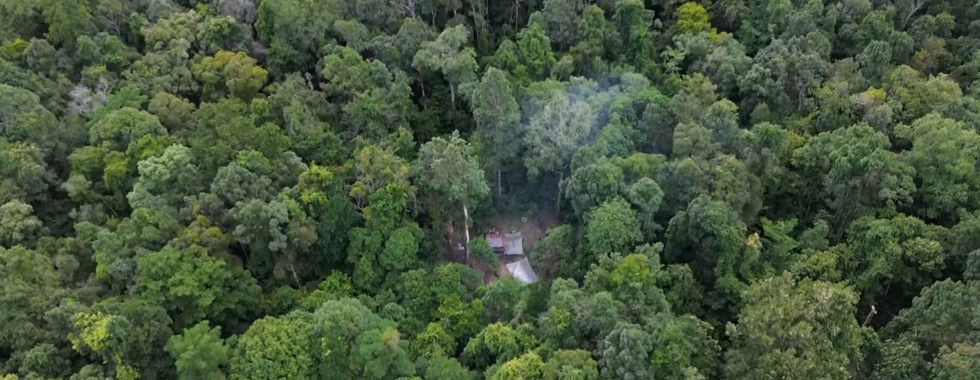


Over the weekend, I joined a group of travellers on a pre-arranged, one-night, two-day camping and hiking trip through the Cardamom Forest, starting from Chi Phat Village.
I knew very little about the trip beforehand, but it turned out to be a full immersion into the rainforest, complete with waterfalls, river crossings, a refreshing swim or two, lots of bugs, leeches and a fun time with good company.
Chi Phat Commune, as it’s commonly known, consists of four small villages: Chi Phat, Komlot, Chom-Sla, and T'k La'ois. It’s located deep in the Cardamom Mountains, southwest of Phnom Penh. This entire area operates as a Community-Based Ecotourism project—owned, managed, and run by the Chi Phat community itself, with technical and financial support from Wildlife Alliance.
Chi Phat sits in the southern Cardamom Mountains, which make up the largest mainland rainforest in Southeast Asia. A jewel among the world’s 32 biodiversity hotspots, the mountain range is draped in emerald forest stretching from mountaintops all the way to the oceanfront. Below, a vast network of estuaries and mangroves feeds incredibly rich fisheries. This wilderness is also one of Asia’s seven remaining elephant corridors and home to the planet’s last wild populations of Siamese crocodiles and Royal Turtles.
I’d heard whispers about Chi Phat—its rainforest treks, eco-friendly villages, conservation efforts, and the growing push for eco-tourism—but none of it is mainstream, and maybe that’s exactly how the community prefers it. Eco-tourists are likely the ones who truly seek out adventures like this, and I’d definitely consider myself part of that demographic. I had also heard that Cambodia is in the process of acquiring four Indian Bengal tigers to release into the Cardamom rainforest —part of an effort to restore a top predator to the ecosystem, as tigers have been extinct in the Cardamom rainforest since 2007. The thought of tigers roaming free in the same area we were about to casually hike through definitely played in the back of my mind.
Our early morning meeting point was a petrol station in the heart of Phnom Penh, where we hopped onto a bus bound for Chi Phat Village—about a three-hour drive southwest of the city. Along the way, we stopped for breakfast: a typical Khmer dish of kuy tiev sach chrouk (rice noodles with pork).

To reach Chi Phat Village itself, we crossed the river on a small ferry, grabbed our packs, and walked to our eco-tour lodge. There, we registered our names and collected our packed lunches, tents, mats, and the ingredients that would become our dinner and the following morning’s breakfast.

We then climbed onto a farmer’s two-wheel tractor, perched on the back of a rickety wooden carriage that rattled along the track as it carried us to our first destination—a beautiful, fast-flowing waterfall called O'Malu. We cooled off with a swim in the refreshing water and ate the simple but delicious lunch prepared for us earlier: rice and pork wrapped neatly in a banana leaf.
We were a relatively small group of mixed nationalities, though the majority were French. From my travels around Southeast Asia, I’ve noticed that many French travellers visit Vietnam, Laos, and Cambodia—likely influenced in part by the region’s historical ties to former French colonial rule.
After the waterfall, we were taken back to a dirt track we had passed earlier, with a small stall on one side. We shouldered our packs, topped up our water, and set off on foot down the dusty path. A 2 p.m. start in 35°C heat, high humidity, and with a loaded pack is no easy feat. I felt like I was being cooked, my body working overtime just to keep me cool. Within minutes, both I and the others were drenched in sweat. There was no breeze—it was sticky and oppressive—and every time we paused, a plume of mosquitoes descended on us. What have I gotten myself into? I thought.
I also realised that I had no idea how far we would be walking on the first or second day of the hike, or what the terrain would be like. In fact, it was at that moment I noticed just how blasé I had been about the whole trip. Sreyneth had simply said it was going to be a fun weekend adventure. Beyond making sure I had closed shoes, water, and sun protection, I hadn’t thought much else about it.
The hike started off flat for a kilometre or two, but the route grew steeper and steeper as we went. The forest closed in around us, and at times the air felt thick enough to chew. We had a couple of local guides with us—blokes in thongs, casually swinging machetes to hack through the more overgrown sections of the trail, or to carve a way around fallen trees. Before setting off, we’d been warned about the high likelihood of leeches and told to check regularly.
About six kilometres in, we were climbing through bamboo forests, scrambling up rocky sections, and then catching our breath. We stopped when we reached a naturally occurring open pocket in the rainforest. We dropped our packs and paused for a moment. Everyone was told to hydrate and check for leeches. One of the French lads - wearing sandals, of all things - had a big juicy one latched onto the inside of his right heel. Our guide wandered over and reminded us not to harm them, that we were guests in their environment. He peeled it off, and the Frenchie began to bleed non-stop. We all had the same thought: what the actual fuck.

I wandered around the open area. There was loose rock, short grass, and these strange-looking plants scattered everywhere. I’d seen them before - Venus flytraps - growing prolifically. I couldn’t help wondering if the poor soil quality here had stunted the growth of other plants and trees, giving these carnivorous little things free rein to thrive. How strange, I thought, in the middle of a rainforest of all places.

We continued on for some time and eventually arrived at another clearing, but this one was man-made. A small tin shed sat there, holding a filthy, breath-stealing squat toilet and a blue barrel of water for self-flushing. There was a place to hang hammocks - an option a few of the solo travellers took and a sheltered area for our tents. At first, I thought the shelter took away from the “authentic” camping experience, but after the rain we endured the next day, I realised a raised, covered platform is probably the greatest gift you can receive when torrential rain hammers down all night and eventually gets inside the tent. We were in a rainforest, after all.
We set up the tents and caught the occasional whiff of a sour Khmer fish soup (Samlar Machu) simmering over an open fire, cooked by a couple of the guides. By this stage we were all starving, so we gathered around the “chefs,” and eagerly waited to try their concoction. By Western standards the soup was pretty bland, but after a 10 km hike through the rainforest we demolished bowl after bowl without hesitation.

Exhausted from the day’s trek, I called it an early night. Some of the Frenchies, on the other hand, decided to stay up drinking happy-water and smoking weed. A choice I could see a few of them regret the next morning.
Over a cup of smoky pot noodles for breakfast, we were told that today’s hike would be around 12 km and probably tougher than the previous day. I glanced around the table at a few gasping faces and realised some of the Frenchies knew as little as I did about what we’d actually signed up for.
We were all running low on water, so overnight a big pot had been boiled over the open fire. The resulting “bottled water” had taken on a flavour comparable to a heavily peated Scottish whisky. I tried masking it with flavoured electrolytes, but it didn’t help much - creating some smoky orange drink.
After packing up the tents we set off back into the jungle. At 9 am, the humidity was already unbearable. Some parts of the track we’re getting steeper and steeper and we had to keep a constant eye out for rogue roots - awesome for tripping over but not fun when you land in the dirt.
I had forcefully drunk my way through about a litre of my smoky water when we approached a shallow river crossing. Regardless of how shallow river crossing are, I always take my boots and socks off - there’s nothing worse than walking a full day or two with wet feet. A few of us made it through when I heard a huge thud behind me. One of our group had dramatically gone tits-over-arse. He looked a little stunned when I first saw him, but then he let out a bellowing laugh, which we all echoed.

This was a glorious spot to stop and take a swim, and since one of our crew was already in the drink, we all decided to get our kit off and cool down. The water was crystal clear and refreshingly cool. I remember thinking, it’s moments like these I will remember for years to come.

As we started getting our kit back on, it began to rain gently but progressively. I made a remark about how surprised I was that we hadn’t really had any rain since arriving, and then, with the might of Poseidon himself, we were all reminded that we were in a rainforest. I scrambled for my rain jacket but realised it was already too late. I got the rain cover on my bag and hoped I’d packed another change of clothes at the bottom so I could change into something dry when we got back to the village.
The rain was coming down hard - torrential. My Timberland boots, which I’d bought cheap from the Toul Tompong markets the day before, filled up with water almost instantaneously and with every step I took, an audible slushing sound could be heard, followed by a gush of bubbles and water spewing out from the top. Aside from the boots, I was feeling pretty refreshed by the sudden downpour. However, the rain decided to stay and somehow intensified from time to time. After an hour or so, conversation had stopped, visibility was severely reduced, and my body temperature dropped. I started to feel uncomfortable and presumably everyone else was feeling the same. I was amazed how some water could change a situation so quickly.
Another two Frenchies had fallen victim to leeches, and we all decided to do another head-to-toe check. Neth had one latched to her thigh and another crawling up her neck. The enjoyment of the trip, I felt, was being leeched away from us hour by hour.

I asked Neth if everything was okay and she gave a nod; however, I could tell she was having similar thoughts. I didn’t think it was the rain that was bothering her, but the blood-sucking leeches around every corner. I told her not to worry about them and that they seemed worse than they actually were… I’ve never been the best at reassuring people.

We finally made it to the river boat that had been pre-arranged to take us back to Chi Phat village. Tired, wet, and exhausted, everyone was quiet and likely processing the last 24 hours. After numerous meanders of the river, we arrived back in Chi Phat, returned the camping gear, and then awaited our ferry back across the river to the bus that would return us to Phnom Penh. It started raining again, and the small river crossing was on an open-top boat. We all got on and huddled together like wet river rats.
The bus trip back to Phnom Penh made a stop at a local restaurant just off the highway. By this stage, we were all ravenous and to the delight of the restaurant owner we ordered loads of food: rice, noodle soup, ginger chicken, fried pork, and fresh coconuts. We got back on the bus and slumped into food comas, only to be awoken not long after by a French couple at the back of the bus swearing and clearly alarmed about something. It turned out that the French bloke that had been bitten earlier had another huge leech on his other leg this time. He’d pulled it off, and it was bleeding prolifically when I looked over. This made everyone on the bus jump up and do another full-body check. We were in the clear. I looked at Neth, and I could tell she was already feeling relieved to be out of the leech-infested forest.
What an experience—and one I’m truly glad to have shared with you.
Thanks for reading - I hope it gave you a few laughs and offered some useful travel insights. Whether it’s inspired you to lace up your boots and head into the Cardamom rainforest yourself, or completely deterred you from doing so, I’m happy you came along for the ride. For other funny travel stories, please check out my blog!
Until the next adventure, The Humble Traveller


Comments